Posted
September 29, 2026
Written by
Yana Ermilova
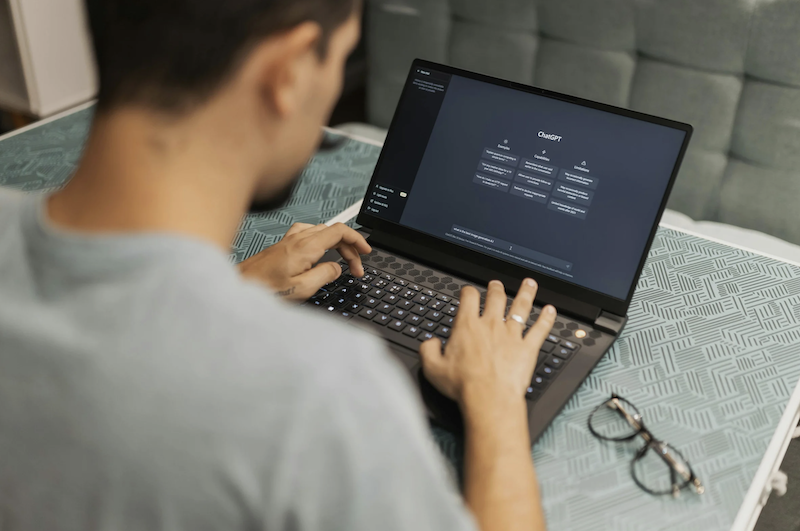


Artificial intelligence is quickly becoming part of everyday life. People use it to plan trips, write emails, organize schedules, and answer questions. Increasingly, they are also turning to AI to talk through emotions, stress, relationships, and mental health concerns.
And this is not a small trend. In a 2026 survey of more than 1,200 licensed psychologists, the American Psychological Association (APA) found that 77% had spoken with patients who had used AI for support, engagement, or other reasons.
For some people, opening an AI chatbot may feel easier than reaching out to another person. There is no appointment to schedule, no concern about saying the “right” thing, and you can type a question at midnight and receive an immediate response.
That accessibility can be genuinely helpful, especially when you are trying to make sense of something or simply need a place to begin.
As more people turn to AI for emotional support, many are wondering can AI replace a therapist, or is it better used as a tool alongside professional mental health care?
The short answer is no. The APA advises that generative AI chatbots should not be used as a replacement for a qualified mental health provider. At the same time, AI may have a useful role as a supportive tool alongside professional care.
Understanding both its possibilities and its limitations can help you use AI in ways that support your well-being without asking it to provide something it was not designed to offer.
Sometimes the hardest part is simply figuring out what you are feeling.
You may know that something feels wrong, but you are not sure whether you are anxious, disappointed, overwhelmed, angry, lonely, or simply exhausted. At other times, you may know how you feel but have difficulty explaining why.
AI can help you slow down and begin organizing your thoughts. You might describe a situation and ask for questions that could help you reflect on what you are experiencing.
For example, you could ask:
The APA notes that AI may be useful for organizing thoughts, generating questions, and encouraging reflection before an appointment with a mental health professional.
Of course, a therapist can also help you identify and understand your emotions. The difference is that a therapist can get to know you over time, ask thoughtful follow-up questions, and help you explore how your feelings may connect to your experiences, relationships, and patterns.
Still, as a starting point, AI may help you arrive at therapy with a clearer sense of what you would like to talk about.
Mental health terminology can sometimes feel confusing or overwhelming. AI can explain common terms and concepts in more accessible language.
You might use it to learn about topics such as anxiety, boundaries, stress, grief, emotional regulation, attachment, trauma responses, or coping skills. Having a basic understanding of these ideas can help you feel more informed and give you a starting point for a deeper conversation with a professional.
However, it is important to remember that AI-generated information is not always complete or accurate. AI can sometimes present an answer with great confidence even when important details are missing or incorrect. The APA recommends verifying mental health information with a qualified health professional.
AI can help you learn the language of mental health, but a trained clinician can help you understand how, or whether,that information applies to your individual experience.
If you have ever opened a journal and found yourself staring at a blank page, AI may be able to help you get started.
You can ask it to provide prompts such as:
For some people, responding to a thoughtful question feels much easier than trying to decide what to write about on their own.
Used in this way, AI does not have to become your therapist. It can simply provide a place to begin, helping you gather thoughts that you may later want to explore more deeply with someone who can understand them in the context of your life.
AI can offer general ideas for managing everyday stress, such as breathing exercises, grounding techniques, sleep routines, mindfulness practices, or ways to break an overwhelming task into smaller, more manageable steps.
Sometimes, a simple reminder to pause, take a breath, step outside, or focus on one task at a time can be useful in the moment.
Research suggests that some AI-based mental health chatbots may offer benefits in certain situations. A 2025 systematic review and meta-analysis found a modest reduction in negative mental health symptoms across randomized controlled trials. However, the researchers also noted limitations in the available evidence and emphasized the importance of considering potential risks.
These tools may offer helpful ideas, but they are best viewed as supportive resources rather than replacements for individualized treatment.
If a coping strategy does not help, feels uncomfortable, or seems to make things worse, a mental health professional can help you understand why and work with you to find an approach better suited to your needs.
Beginning therapy can feel unfamiliar or even a little intimidating. You may wonder what you are supposed to say, how much to share, or whether you need to have everything figured out before your first appointment.
You do not.
AI may help you prepare by answering general questions such as:
The APA identifies preparing questions and organizing thoughts before an appointment as potentially appropriate ways to use AI. [1]
AI may help you prepare for the conversation. A therapist helps you have it and stays with you as the conversation deepens over time.
Therapy is about much more than receiving advice or being given a list of coping strategies.
A meaningful part of therapy comes from developing a trusting relationship with someone who gets to know you over time. A therapist can begin to recognize patterns in how you think, respond, relate to others, and experience emotions. Together, you can explore not only what is happening, but why certain patterns may keep appearing and what might help create meaningful change.
This relationship, often called the therapeutic alliance, involves trust, collaboration, emotional safety, and a shared understanding of your goals.
Research has consistently found an association between the quality of the therapeutic alliance and positive psychotherapy outcomes. A large meta-analysis involving more than 30,000 patients found that a stronger therapeutic alliance was associated with better treatment outcomes across different forms of psychotherapy.
AI can respond to what you type. It may even produce language that feels supportive or validating. But that is different from being known, understood, and accompanied by another person within a genuine therapeutic relationship.
Mental health is complex, and two people can experience the same symptom for very different reasons.
Difficulty sleeping, for example, could be connected to stress, anxiety, depression, grief, trauma, physical health concerns, medication, relationship difficulties, work demands, or a major life transition. Often, several factors are involved at the same time.
Psychotherapy involves working with a trained mental health professional to understand troubling emotions, thoughts, and behaviors within the context of the whole person and their circumstances.
AI can suggest possibilities based on the information you enter. But it does not know everything you may have left out, forgotten, minimized, or not yet understood yourself. It also cannot conduct the same kind of comprehensive clinical assessment that a qualified professional can.
A therapist can ask follow-up questions, notice inconsistencies or changes, and gradually develop a fuller understanding of your experiences, relationships, history, strengths, and needs.
It can be tempting to ask an AI chatbot, “Do I have anxiety?” “Am I depressed?” or “Do I have ADHD?”
AI may be able to describe symptoms commonly associated with a condition, and some of that information may help you decide whether to seek an evaluation. But reading a list of symptoms is not the same as receiving a diagnosis.
The APA specifically warns that AI is not an accurate method for diagnosing mental health or medical conditions. It may mistake everyday difficulties for clinical symptoms, overlook important information, or provide misleading diagnostic conclusions.
A thoughtful mental health diagnosis requires professional training, careful assessment, clinical judgment, and consideration of your history, current symptoms, level of functioning, physical health, environment, and individual circumstances.
If you are wondering whether you may have a mental health condition, an AI conversation can help you prepare questions—but the evaluation itself should come from a qualified professional.
AI should not be relied upon as your only source of help during a mental health emergency.
If you or someone you know is experiencing suicidal thoughts, self-harm, severe emotional distress, abuse, psychosis, or another urgent safety concern, it is important to connect with a real person and appropriate emergency or crisis services.
The APA cautions against relying on AI as a primary mental health resource and recommends consulting licensed health care professionals whenever possible. The World Health Organization has also emphasized the need for strong safeguards, accountability, and human oversight as AI increasingly interacts with people during emotionally vulnerable moments.
If you are in immediate danger or experiencing a life-threatening emergency, call 911 or go to the nearest emergency room. In the United States, you can also call or text 988 to reach the Suicide & Crisis Lifeline.
You deserve support from people who can respond to your immediate needs and help protect your safety.
AI can generate language that sounds caring, validating, and supportive. Sometimes, those words may provide comfort or help someone feel a little less alone in the moment.
But empathy in therapy involves more than producing an appropriate response.
A therapist may notice your tone of voice, facial expression, silence, discomfort, changes in emotion, or the way you respond to a particular question. They may remember something you shared months earlier or gently draw your attention to a pattern that has emerged across many conversations.
Therapy also gives you the experience of being with another person who is actively listening, responding, asking questions, and making space for your story. Over time, this relationship can become a safe place to practice trust, communication, self-compassion, vulnerability, and new ways of relating to others.
This human connection is one of the reasons psychotherapy is fundamentally different from receiving information or generated responses from a chatbot.
AI can be a useful mental health tool, but current professional guidance does not support using it as a replacement for qualified mental health care.
A more helpful way to think about AI may be as one resource among many.
You might use AI to:
A therapist can then help you go deeper by understanding those thoughts and concerns within the broader context of your life.
Research into AI and mental health continues to evolve. Some studies have found promising results for AI-based tools in reducing symptoms such as anxiety and depression. At the same time, researchers continue to raise important questions about effectiveness, safety, privacy, bias, and appropriate professional oversight.
The choice does not necessarily have to be between AI and therapy. In some circumstances, technology may complement mental health care while the relationship, experience, and professional judgment of a trained therapist remain at the center.
You do not have to wait until something feels unbearable before reaching out for support.
Therapy may be helpful if you are experiencing ongoing anxiety, sadness, relationship difficulties, grief, trauma, parenting challenges, major life changes, work-related stress, or simply a sense that something in your life is not working the way you would like it to.
Sometimes people begin therapy with a very specific concern. Other times, they are not quite sure what is wrong. They may simply want to understand themselves better, feel more connected, or begin making changes in their lives.
Both are valid reasons to begin.
At the Halliday Center for Psychotherapy & Wellness, our therapists are highly trained and experienced in working with children, teens, adults, couples, and families facing a wide range of emotional concerns and life challenges. Our clinicians bring professional training, clinical judgment, and years of experience to their work. Just as importantly, they take the time to understand each client’s unique history, relationships, strengths, needs, and goals.
You do not need to have everything figured out before contacting us. We can help you consider what kind of support may be most helpful and connect you with a clinician who may be a good fit.
If you are wondering whether therapy could be helpful for you or someone in your family, call us at 760-635-3310 Ext 1 or complete our contact form to get started.
AI can provide general information, reflection prompts, coping ideas, and other forms of support. However, professional organizations, including the American Psychological Association, recommend that generative AI not be used as a replacement for a qualified mental health provider.
AI may be helpful for general education, journaling, organizing your thoughts, and preparing questions. However, it should not be your only resource for understanding mental health symptoms, making treatment decisions, obtaining a diagnosis, or responding to an emergency.
The APA recommends verifying mental health information received from AI with a qualified health professional. It is also important to be thoughtful about the personal information you share with any AI system.
AI can describe symptoms commonly associated with anxiety or depression, but it should not be relied upon to provide a clinical diagnosis. The APA warns that AI tools may offer misleading or inaccurate diagnoses and treatment recommendations.
A qualified professional can consider your symptoms within the context of your history, health, relationships, environment, and day-to-day functioning.
Possibly. Research suggests that some mental-health-focused AI chatbots may help reduce anxiety and depression symptoms for certain people. However, results vary across tools and studies, and these technologies should not automatically be considered equivalent to professional therapy.
AI may offer a coping exercise or reflection prompt. A therapist can help you understand what may be contributing to your anxiety and develop an individualized approach to addressing it.
You should not assume that information shared with an AI chatbot has the same privacy protections as information shared during professional therapy.
The APA recommends being cautious about entering personal health information into AI systems. The World Health Organization has also identified privacy and responsible data use as important concerns in AI-supported health care.
Before sharing sensitive information, review the platform’s privacy policy and consider whether the details are necessary to receive the general guidance you are seeking.
An AI chatbot generates responses based on its technology, training, and the information you provide.
A licensed therapist has professional education and clinical training. A therapist can assess your individual needs, use clinical judgment, build an ongoing therapeutic relationship, recognize complex patterns, and develop treatment around your particular circumstances and goals.
Yes, in some situations. The APA notes that AI may be useful as a supplemental tool for activities such as organizing thoughts and preparing questions, particularly when someone is already working with a licensed professional.
It may also be helpful to talk openly with your therapist about how you are using AI and what you have found helpful, confusing, or concerning.
The key is to think of AI as a possible addition to care, not a substitute for it.
[1] American Psychological Association. (2026). Patients Are Bringing AI to Therapy: Highlights From the 2026 Chatbots and Mental Health Survey.
The APA surveyed more than 1,200 licensed psychologists about how patients are using AI for mental health support.
[2] American Psychological Association. Health Advisory: Use of Generative AI Chatbots and Wellness Applications for Mental Health.
The advisory discusses appropriate uses, risks, scientific evidence, and why AI should not replace qualified mental health professionals.
[3] Zhang, Q., et al. (2025). Generative AI Mental Health Chatbots as Therapeutic Tools: Systematic Review and Meta-Analysis of Their Role in Reducing Mental Health Issues. Journal of Medical Internet Research.
The review included 26 studies and a meta-analysis of 14 randomized controlled trials examining generative AI mental health chatbots.
[4] Flückiger, C., Del Re, A. C., Wampold, B. E., & Horvath, A. O. (2018). The Alliance in Adult Psychotherapy: A Meta-Analytic Synthesis. Psychotherapy.
This meta-analysis examined 295 studies involving more than 30,000 patients and found a consistent relationship between therapeutic alliance and treatment outcomes.
[5] National Institute of Mental Health. Psychotherapies.
NIMH provides an overview of psychotherapy, its goals, and the role of licensed mental health professionals.
[6] World Health Organization. Artificial Intelligence for Health and Towards Responsible AI for Mental Health and Well-Being.
WHO provides guidance on responsible AI in health care, including issues involving safety, ethics, privacy, accountability, and human oversight.

Sign up with your email address:
Share this article




Get In Touch
Begin Your Journey
Get In Touch
Begin Your Journey
 All articles